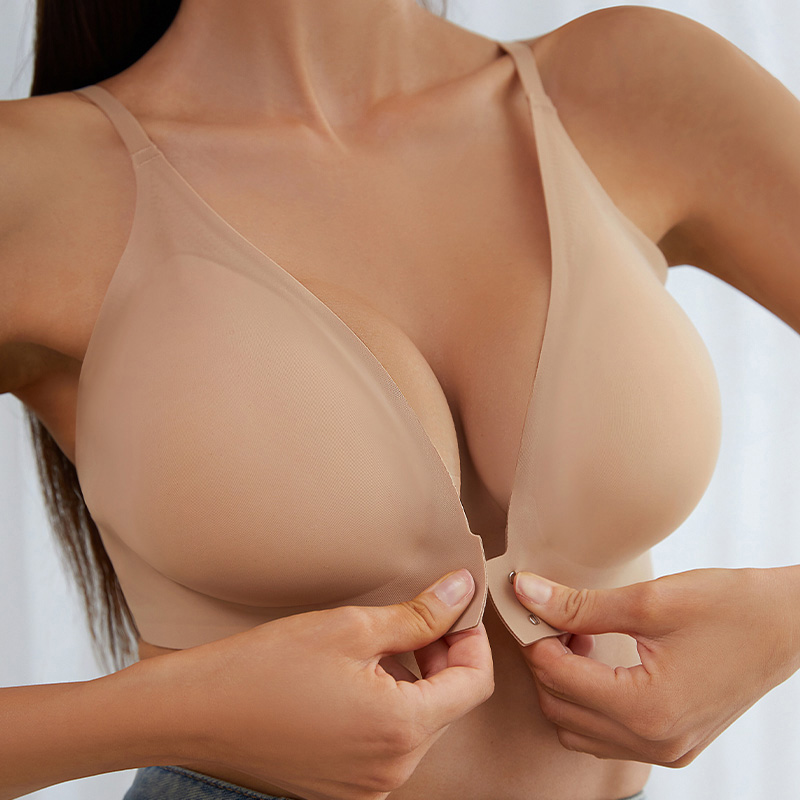
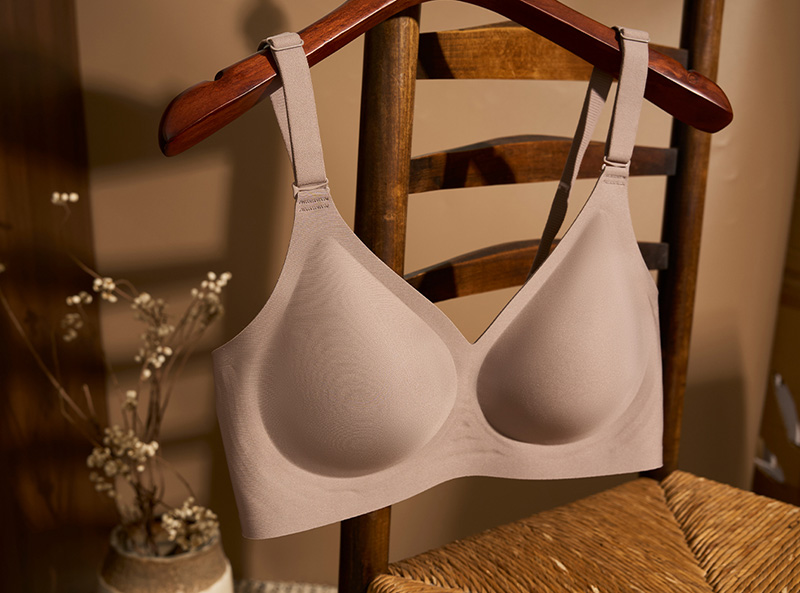
As Jelly Bras continue to gain traction in modern lingerie collections, more brands are entering the category — often with similar claims:soft, seamless, supportive, invisible.But once these products reach real consumers, a pattern starts to emerge.
Some perform exactly as expected — offering a rare balance of comfort and support.
Many others, however, quickly fall short.
They feel good at first touch, but fail in wear.
They look refined in photos, but lack stability in motion.
The question is not whether jelly bras work.
The real question is: why so many of them don’t.
The Illusion of Sameness
At a glance, most jelly bras look nearly identical.
They share:
molded cups
smooth surfaces
soft-touch interiors
From a sourcing perspective, this creates a dangerous assumption:
if they look the same, they must perform the same.
In reality, jelly bras are not defined by appearance, but by what happens beneath the surface — in how they manage force, movement, and recovery.
And this is where most products begin to fail.
Where Things Go Wrong: Not Material, But Structure
A common misconception is that jelly bras are simply about using a “better” or “softer” material.
But softness alone does not create support.
In many lower-quality products, jelly is treated as an add-on — a layer inserted into an otherwise standard wireless bra construction. The result is predictable:
the bra feels soft, but behaves like any other low-support design.
What’s missing is not the material itself, but the structural logic behind it.
Well-engineered jelly bras are designed as systems, not assemblies.
They distribute force across the garment — through the cup base, the side wings, and the back — rather than relying on a single area to carry the load.
When this distribution is absent, the product loses stability, no matter how soft or advanced the material appears.
The Hidden Role of Elastic Behavior
Another difference, less visible but equally critical, lies in how the material responds under pressure.
High-quality jelly structures behave dynamically.
They remain soft under light contact, yet provide increasing resistance as load builds.
This adaptive response is what allows a bra to feel comfortable at rest, but supportive in motion.
In contrast, many lower-grade versions behave in a more linear way — they compress easily, but do not recover or respond effectively as movement increases.
This is why some products feel promising in the fitting room, but fail during extended wear.
They are not engineered to respond — only to compress.
Integration vs Attachment
One of the most overlooked differences in jelly bras is how the structure is built into the product.
In higher-end designs, the jelly support is integrated into the molded form itself. It becomes part of the geometry — shaping how force travels through the bra.
In lower-cost versions, the gel is often added afterward — inserted, glued, or layered onto foam.
This distinction may seem subtle, but its impact is significant.
An integrated structure allows for continuous stress flow across the surface.
An attached layer interrupts that flow.
Over time, this leads to:
instability in shaping
separation between layers
inconsistent performance
What appears to be the same feature is, in practice, a completely different system.
Why Durability Fails So Quickly
Another common complaint in lower-quality jelly bras is that they don’t last.
The initial feel may be acceptable, but after repeated wear or washing, the structure changes:
support weakens
shape softens
fit becomes less reliable
This is often attributed to “material quality,” but the issue is more complex.
Durability in jelly bras depends on:
how well the material recovers after deformation
how stable the bonding and construction are
how evenly stress is distributed during use
If any part of this system is compromised, degradation accelerates.
What fails is not just the material — but the relationship between material and structure.
The Real Gap Between Products
From a commercial perspective, the most important insight is this:
the difference between jelly bras is not visible — but it is absolutely measurable in performance.
Two products may look identical, share similar specifications, and even use similar terminology.
But their behavior in real use — in lift, stability, recovery, and comfort — can be fundamentally different.
This is why the category often feels inconsistent to brands entering it for the first time.
The variation is not accidental.
It is the result of different levels of engineering investment.
What This Means for Lingerie Brands
For brands, the implication is clear.
Jelly bras are not a shortcut to innovation.
They are a category that requires deeper product understanding.
Approaching them as a simple extension of seamless bras often leads to:
underperforming products
unclear positioning
difficulty justifying price differences
But when approached as a structural upgrade to wireless design, jelly bras open a different path:
more stable support without underwire
clearer differentiation from basic seamless products
stronger foundation for premium collection
In that sense, the real value of jelly technology is not in how it feels at first touch —
but in how it performs over time.
A Different Way to Think About Jelly Bras
A more practical way to evaluate jelly bras is to shift the focus:
from the presence of jelly material
to the design of the support system itself.
Because performance is not defined by materials alone,
but by how they are engineered into the structure.
Conclusion
Most jelly bras don’t fail because the concept is flawed.
They fail because the execution stops at the surface.
True performance in this category comes from understanding jelly not as a feature, but as part of a — one that manages force, adapts to movement, and maintains integrity over time.
For brands willing to approach it this way, jelly bras are not just another product variation.
They represent a deeper shift in how wireless support can be designed — and how value can be built beyond price.
Walk into today’s lingerie market, and you’ll see a familiar landscape:
seamless bras, wireless bras, bonded underwear — categories that have been optimized for comfort, efficiency, and cost.
For many brands, working with a Seamless Bra Manufacturer or sourcing from an OEM lingerie manufacturer for wireless bras has become a standard part of building an entry-level product line.
And for a long time, that was enough.
Seamless Jelly Strip bras delivered exactly what the market asked for —
lightweight comfort, invisible wear, and competitive pricing.
But as more brands enter the category and product offerings become increasingly similar, a new challenge emerges:
How do you move beyond basic products and build real differentiation?
This is where jelly bras are no longer just an option —
they are becoming a strategic category.
When the Seamless Category Reaches Its Ceiling
Traditional seamless bras are built around a clear logic: fabric stretch, foam shaping, and elastic tension.
However, the same structure that makes them easy to scale also defines their limitations.
Because support relies mainly on compression,
these bras often struggle to deliver:
Consistent lift
Long-term shape retention
Stable support for mid-to-full bust sizes
For brands targeting higher-value segments, this becomes a critical issue.
When every product offers similar comfort,
comfort alone stops being a competitive advantage.
Jelly Bras: A Structural Upgrade for Modern Wireless Collections
What sets jelly bras apart is not visible at first glance.
From the outside, they still belong to the world of seamless, invisible lingerie.
But internally, they are engineered very differently.
By integrating flexible jelly support strips,
these bras introduce a new support logic —one that combines flexibility with structure.
For brands working with a jelly bra OEM manufacturer or developing a Custom Wireless Seamless Bra with support structure, this means:
The ability to offer a product that feels soft, but performs closer to a structured bra.
Instead of flattening the bust, jelly bras gently lift and shape it.
Instead of losing support over time, they maintain a more stable form.
This is not just a product upgrade —
it is a shift in how wireless bras are engineered.
Why Performance Over Time Matters More Than Ever
In today’s market, first impressions are no longer enough
Consumers wear products longer, compare more, and expect consistency.
Traditional seamless bras often depend on foam resilience and fabric recovery.
As these materials fatigue, support gradually weakens.
For brands, this leads to:
Decreased customer satisfaction
Higher return rates
Difficulty maintaining a premium image
Jelly bras address this through structural memory.
Because support comes from flexible internal elements rather than compression alone,
the bra maintains its shape and performance more effectively over time.
For brands developing high quality wireless bras for premium lingerie brands,
this directly translates into stronger product credibility and repeat purchase potential.
Moving Away from Price-Driven Competition
One of the biggest challenges in the seamless category is price pressure.
When multiple suppliers offer similar products,
brands are often pushed toward cost competition.
This is where working with a lingerie manufacturer for innovative bra design becomes increasingly important.
Jelly bras provide a clear opportunity to shift positioning:
From price → to performance
From basics → to engineered products
Instead of asking how to reduce cost,
brands can start focusing on how to create value through:
Better support
Improved fit
Enhanced durability
This is what allows jelly bras to evolve into core premium wireless products,
rather than just another SKU.
Fit Consistency Across Markets
As brands expand into global markets, fit becomes more complex.
Different regions bring different body shapes, size expectations, and wearing habits.
Traditional seamless bras often struggle to maintain consistent performance across sizes.
Jelly bras, with their reinforced base and side support,offer a more adaptable structure.
For brands working with a custom lingerie manufacturer for international markets,
this creates a more scalable solution — one that maintains performance across a wider range of sizes and consumers.
Not a Replacement — But a Strategic Layer
It’s important to recognize that jelly bras are not meant to replace seamless bras entirely.
Seamless products will always remain essential for:
Entry-level collections
High-volume basics
Price-sensitive markets
What jelly bras introduce is a new layer:
A product tier that sits between comfort-only brasand fully structured underwire bras.
For brands building a complete collection, this layer is no longer optional —it is increasingly necessary.
Why This Category Will Continue to Grow
The shift we are seeing is not driven by trend alone, but by changing consumer expectations.
Today’s customers are no longer willing to choose between: comfort or support, They expect both.
And as this expectation becomes the norm, products that successfully combine these two elements will continue to gain importance.
This is why more brands are actively exploring partnerships with a jelly bra OEM manufacturer
or developing their own custom wireless bra with support structure —not as a short-term experiment, but as part of a long-term product strategy.
Instead of replacing seamless bras, jelly bras are becoming a necessary upgrade within the wireless category.
For brands looking to move beyond basic comfort products, the real question is no longer whether this direction matters — but how quickly it should be integrated into the collection.
In a saturated seamless market, real differentiation no longer comes from doing the same thing at a lower price.
It comes from offering something structurally better.
Jelly bras represent that shift.
By combining:
Flexible support technology
Long-term shape retention
Elevated product performance
They allow brands to move beyond basic comfort and build collections with stronger identity and higher value.
For brands looking to evolve their wireless category, the question is no longer if jelly bras should be considered —
but when and how to integrate them into the product strategy.
If you are exploring custom jelly bra development, or looking for a reliable OEM lingerie manufacturer for premium wireless bras, working with a factory that understands both seamless bonding and structural support engineering will be key to achieving the right balance between comfort, performance, and scalability.
In modern industrial and laboratory environments, Clean Booth and Mobile LAF Trolley are becoming increasingly popular. These systems offer unparalleled flexibility and cost-effectiveness compared to traditional stationary cleanrooms. However, this flexibility also places special demands on the core component – the filter.
Today, let's take a closer look at how to choose a clean shed and Fan Filter Unit (FFU) for efficient mobile purification, especially why the "Lightweight" and "Low Pressure Drop" filters are emphasized.
1. Why do cleanrooms and mobile equipment need special filters?
Laminar Air Flow devices often rely on Fan Filter Unit (FFU) to provide clean air. Unlike large central air conditioning systems (AHU), Fan Filter Unit (FFU) have limited power of fans built into them.
This brings up a core contradiction: limited turbine power vs. wind resistance to be overcome.
If the filter is high pressure drop, the fan will not be able to push enough airflow, resulting in the cleanhouse not achieving the expected cleanliness (e.g. Class 100). Therefore, when selecting a Fan Filter Unit (FFU) system, we must follow the principles of "light weight" and "low resistance".
2. Core selection strategy: change from "deep" to "shallow"
In traditional large cleanrooms, engineers often prefer filters with "Deep Pleat" design to increase dust holding. However, in Fan Filter Unit (FFU) and cleanshed applications, this design may not be feasible.
Strategy 1: Reject deep pleats and embrace low drag While Deep Pleat Hepa Filter excels in industrial dust removal, in Fan Filter Unit (FFU), we need to consider how to reduce wind resistance. For cleanshed and mobile LAF systems, a filter design with lower resistance should be preferred to ensure that the fan can easily maintain Laminar Air Flow.
Strategy 2: Balance size and weight Clean LAF are usually mounted on the ceiling or stands, while mobile LAF require frequent movement. This requires the filter to be lightweight. Excessive filters not only increase installation difficulty but can also burden the structure of the clean shed.
3. The Three Golden Rules for FFU Supporting Filters
To ensure that your clean booth or mobile purification equipment can operate efficiently, the following are filter selection rules summarized based on the characteristics of Fan Filter Unit (FFU):
Rule 1:The Lower the Resistance, the Better
When selecting a filter, the primary indicator to focus on is the "Initial Pressure Drop." For a Fan Filter Unit (FFU), the goal is to find a product with minimal resistance while ensuring filtration efficiency (such as H13, H14). This can effectively extend the fan's lifespan and reduce energy consumption.
Rule 2: Give Priority to Mini Pleat Technology
Although Deep Pleat filters have a large dust-holding capacity, Mini Pleat HEPA Filters, with their more compact structure and lower air resistance, are becoming the preferred choice for FFU systems. This design achieves a perfect balance between efficiency and low resistance within a limited space, making it ideal for compact clean booths.
Rule 3: Pay Attention to Airflow Uniformity
The core of Laminar Air Flow is to create a unidirectional flow environment without turbulence. Therefore, the supporting filter must perfectly match the Fan Filter Unit (FFU) diffuser plate to ensure uniform air velocity and avoid generating turbulence.
In summary, selecting a filter for clean booths and mobile purification equipment is not simply about purchasing a "high-efficiency filter." It is a precise calculation process based on aerodynamics. In your next project, whether designing a Clean Booth or purchasing a Mobile LAF, please remember: in the world of Fan Filter Unit (FFU), Low Pressure Drop and Lightweight are the only shortcuts to efficient cleanliness. Be sure to confirm the filter's resistance curve with your supplier to ensure it can harmonize with your Fan Filter Unit (FFU).
Everyone is watching events like Coachella Valley Music and Arts Festival, but the real opportunity for bedding brands starts after the music stops.
Hot nights, outdoor stays, road trips, Airbnb weekends—these are the moments when sleep breaks down first. People feel tired, overheated, and uncomfortable, yet traditional bedding products rarely solve this problem well.
This is where a new category is emerging: bedding that is light, breathable, and cooling—without sacrificing the comfort of a “real blanket.” And that’s exactly where a modern solution like a cooling comforter becomes essential.
Designed for Real-Life Heat & Travel Sleep Problems
Today’s consumers don’t just sleep at home—they sleep everywhere. Hotels, tents, couches, and short-term rentals have become normal sleeping environments.
Most blankets fail in these scenarios: they trap heat, feel too heavy, or lose comfort after compression and travel.
Our upgraded thick cooling comforter is designed specifically for this gap:
Cooling fabric helps regulate summer heat
Breathable structure reduces overheating during sleep
Soft touch keeps a home-like sleeping experience even outdoors
It’s not just about staying cool—it’s about staying comfortable in unpredictable environments.
A Better Balance: Cooling + Comfort + Value Perception
Many cooling products feel too thin or too technical. But users still want emotional comfort—the feeling of a real blanket.
That’s why we upgraded the structure to include a thicker filling design while maintaining airflow performance. This creates a dual benefit:On one hand, it enhances perceived quality and value. On the other hand, it still performs as a breathable cooling blanketsuitable for hot sleepers.This balance is what makes it suitable not only for end consumers, but also for brands building long-term bedding collections.
Built for Brands: Flexible, Fast, and Scalable
Beyond performance, this product is also designed for business growth.
We support low barrier entry for new and growing bedding brands:
Low MOQ for market testing
Custom logo and packaging options
Fast sampling for seasonal trends
This allows sellers to test demand quickly before scaling production. In fast-moving markets like summer bedding, speed matters as much as product quality.
From Trend Moment to Long-Term Product Line
Cooling bedding is no longer just a seasonal trend—it’s becoming a year-round lifestyle category driven by travel, urban living, and heat stress.
A well-designed cooling comforter is not just a product for summer nights. It is a scalable SKU that fits multiple scenarios: home sleeping, travel use, guest rooms, and outdoor stays.
For brands, this is the kind of product that can start small, validate fast, and grow into a full bedding line.
The Challenge: Unstable Supply Chains in Home Textiles
With rising global tensions, supply chains have become increasingly unpredictable. From fluctuating energy costs to ongoing shipping delays, the home textile industry is facing constant pressure. Seasonal products like summer bedding are especially vulnerable, as demand peaks within a short timeframe and delays can directly impact sales performance.
Why Summer Bedding Needs to Evolve
Traditional summer blankets often struggle to balance comfort and cooling. Thin blankets may lack coziness, while thicker ones trap heat and cause discomfort. For hot sleepers and consumers sensitive to temperature changes, finding the right product becomes a challenge. This is where innovation in materials and structure becomes essential.
Introducing the Fluffy Cooling Blanket
Our Fluffy Cooling Blanket is designed to solve both comfort and temperature issues. Featuring a nylon cooling fabric surface and a breathable fluffy filling, it delivers a cool-to-touch sensation while maintaining a soft, lightweight feel. Unlike conventional blankets, it provides thickness without overheating, making it ideal for summer and air-conditioned environments.
Designed for Performance: Cooling, Breathable, Reliable
This Cooling Blanket combines double-sided functionality with a 220 GSM lightweight structure. The breathable design helps regulate body temperature, while sweat-wicking properties keep users dry throughout the night. It is also machine washable and durable, ensuring long-term usability for end consumers.
Built for Brands: Flexible & Scalable Supply
Beyond product performance, reliability in supply is key. We provide stable production capacity, flexible MOQ, and full OEM/ODM support to help brands adapt to changing market conditions. Whether you're launching a new line or scaling an existing business, our solutions are designed to reduce risk and increase efficiency.
A Reliable Partner for Growing Bedding Brands
In uncertain times, choosing the right supplier is just as important as choosing the right product. Our Lightweight Cooling Blanketnot only meets consumer demand for comfort and cooling but also supports brands with dependable supply chain solutions.
If you're building a bedding brand today, you don’t just need a product—you need a partner you can trust.