Is it better to use Washing Powder or Laundry Capsules?

Is it better to use Washing Powder or Laundry Capsules?

Using which type of laundry detergent really depends on your individual preferences and needs. Washing powder is typically cheaper, while laundry capsules offer a more convenient solution with less mess.

Some washing powders are known for their powerful cleaning abilities, while others are better for sensitive skin, so it's important to consider other factors when making a decision.


China laundry detergent capsule


5 Advantaged of Laundry Capsules:

1. Laundry capsules are more convenient to use than powder, as they are pre-measured and ready to use.

2. Laundry capsules are less messy than powder and save time in scooping and measuring the powder.

3. Laundry capsules contain more concentrated formulas that make them more effective in removing tough stains than powder.

4. Laundry capsules are often more cost effective than powder.

5. Laundry capsules are easier to store than bulky powder containers.


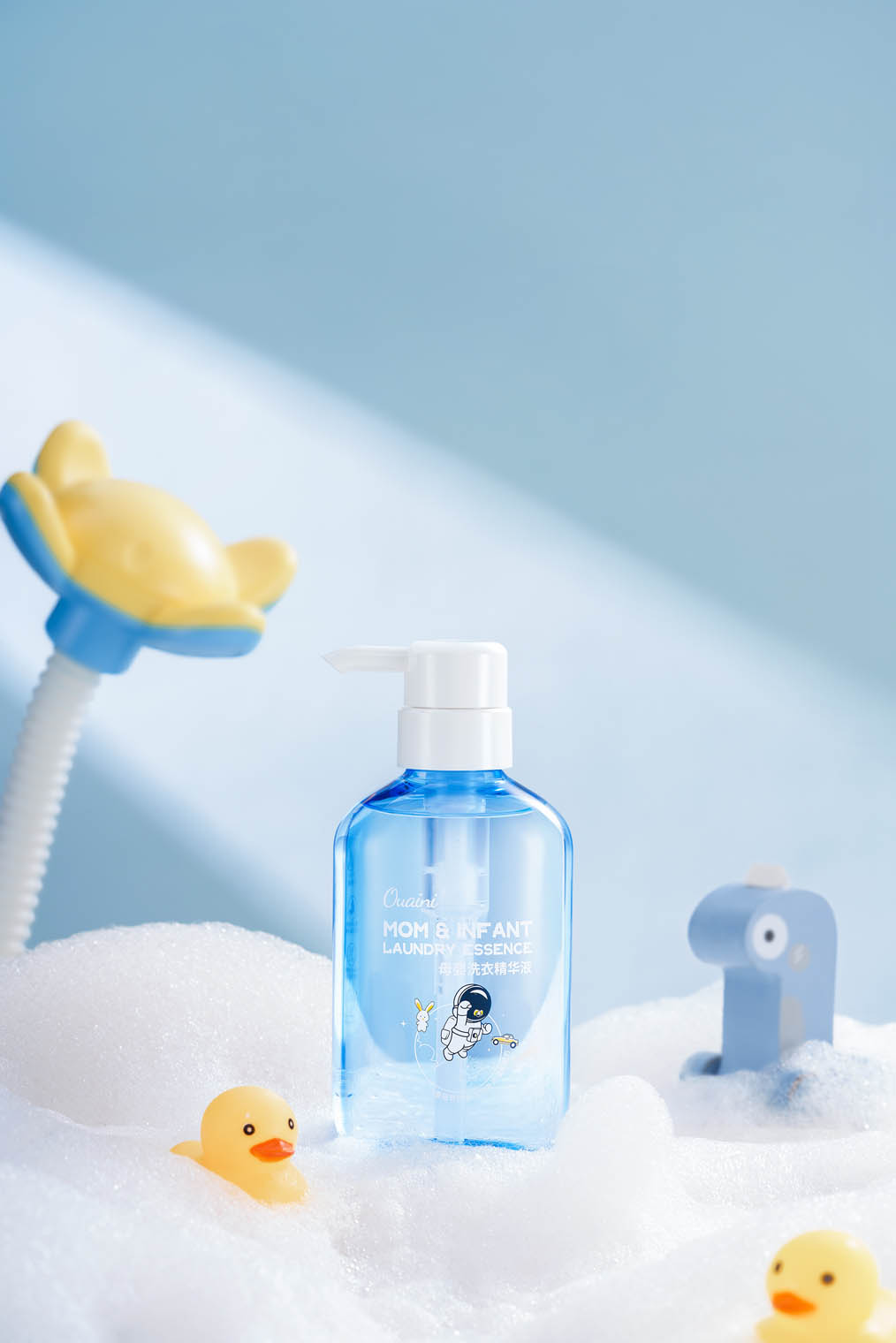
New Arrival 300ML Mom & Infant Laundry Essence!!!

New Arrival 300ML Mom & Infant Laundry Essence!!!


Mom & Infant Laundry Essence Laundry Detergent, with bacteria & mite removal rate of 99.9%, mild and nonirritating plant extracts. Contain Denmark blend enzymes, easily remove milk stains etc. and low foam easy to rinse.


Active content ≥55%, much concentrated and tough on stains.

Phosphorus-free
Flurescent Brightener-free
Bleach-free
Formaldehyde releaser-free
Paraben-free
Alcohol-free
Isopropyl alcohol-free

Methanol-free


Mom & Infant Laundry Essence

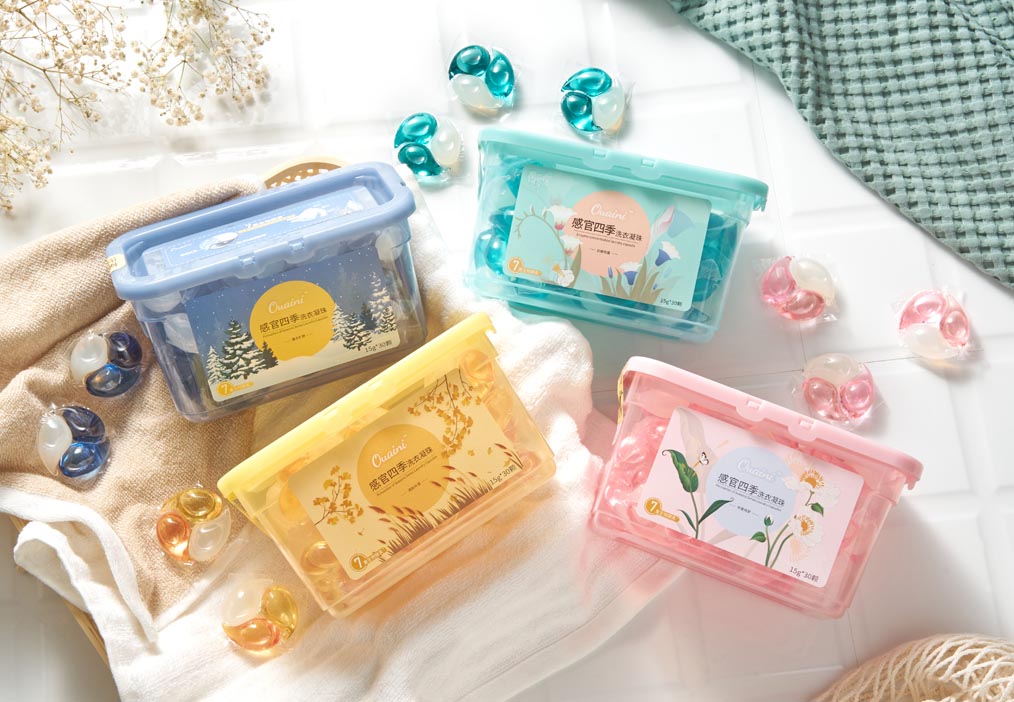
Perception of Series Laundry Pods

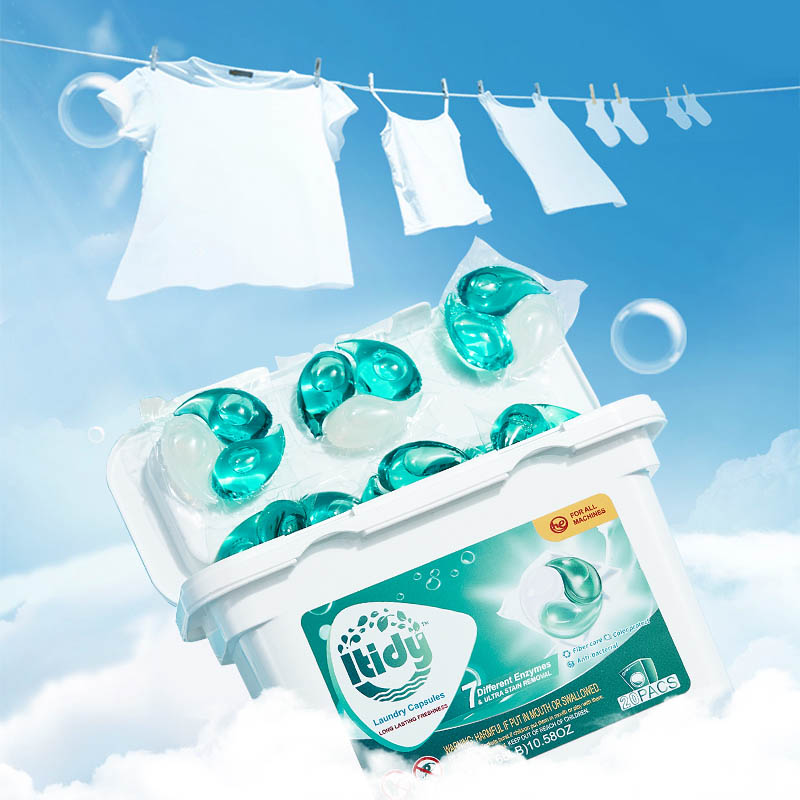
Perception of Seasons Series adopt blend enzymes. Seven types of enzymes targeting specific stains:


The active content of our laundry pods is greater than 60%, it is 4 times comparing to the industry standard. As the standard laundry liquid’s active content of the industry is only 15%. The stain removal of protein type of stains is equivalent to 8 times the cleaning power of the regular laundry liquid.


The Perception of Seasons Series contains bacteria & mites removal function, with 99.9% removal rate of common bacteria and mites, protect our families efficiently.


The Perception of Seasons Series adopted large amount of natural lipase (Natural soap), natural enzymes, DTI dye transfer inhibitor, 301 softener, isomerized alcohol surfactant and other high-quality raw materials, the product has the functions of strong cleaning power, low foam easy to rinse soft color protection and other functions.


Blend Enzyme Laundry Detergent Pods


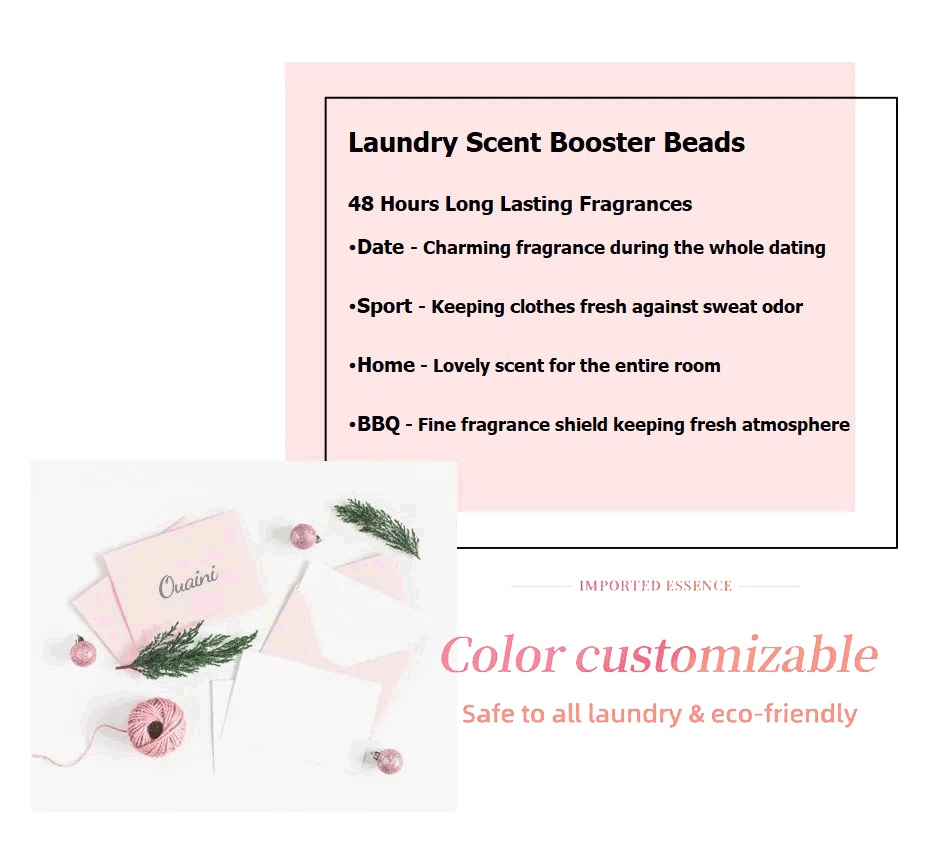
The Perception of Seasons Series used fragrances from top international fragrance companies.


Youkai Technical adopt strictly high-quality standard for R&D, quality control and production process. At the same time, great care is taken in the selection of each raw material - whether it is a water-soluble film or a fragrance, a surfactant or an auxiliary.


Concentrated, green, high-quality detergents extend the lifespan of your clothes and make your clothes look like new every day. The price of high-quality detergent may be higher, but it can wash the clothes more cleanly and care for them better, the breathability of the clothes is better, and the health of the family is better guaranteed. What's more, using high-quality detergents can also reduce environmental pollution, why not?


Why do my laundry pods not dissolve?

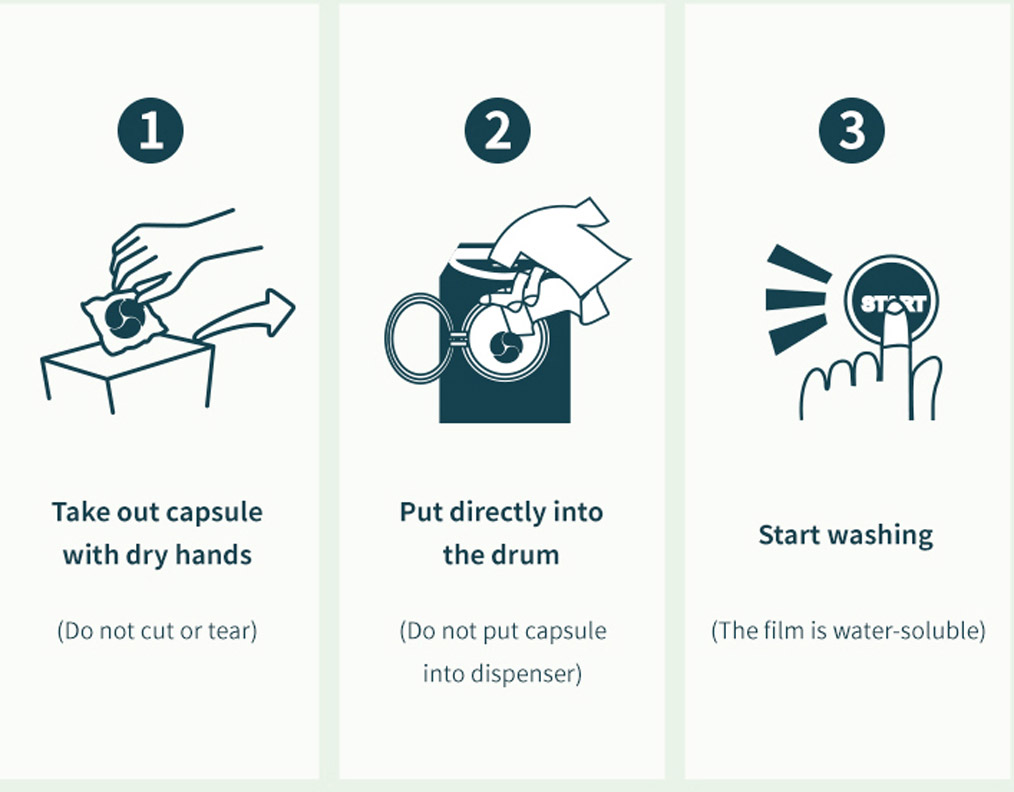
When we take the laundry pod from the package, do we need to cut or tear the film? The answer is no. Actually, the film of the laundry pod is a water-soluble film, that it dissolved when meets with water, therefore, you will just need to toss the laundry pod into the washing machine.


Ok, is our problem solved? Obviously, no.


One of the reasons is that those front-load washing machine consumes lesser water amount for washing and laundry pods tossed into washing machine in an improper way.


How do we avoid the problem mentioned above?

Step 1: toss the laundry pod into the empty washing machine

Step 2: put in your clothes ready for washing

Step 3: turn on the washing machine, start washing.


The reason that we toss the laundry pod into the washing machine before putting our clothes is to prevent the laundry pod being wrapped when the clothes rolled and tied together.


Does a Basin Need an Overflow?

In the early days of bathroom product design, the overflow hole was a standard feature on nearly every basin. The purpose was simple: when users forgot to turn off the faucet or when water drained too slowly, the overflow allowed excess water to return to the drain—clearly showing the benefits of a basin overflow hole in preventing flooding and water damage.


As home safety awareness increased, the overflow hole became widely viewed as a basic protective feature.


Why Are Many Modern Basins Designed Without an Overflow?


In recent years, more designers and hotels have adopted the modern bathroom basin without overflow. Several factors drive this trend:


1. Cleaner, Minimalist Appearance

A basin without an overflow offers smoother lines and a unified surface, ideal for contemporary minimalist bathrooms.


2. Easier to Clean, No Hidden Hygiene Problems

The overflow tunnel is narrow and deep, often trapping dirt and odors. This is one of the common disvantages of basins without overflow, but for many homeowners, removing this tunnel makes the basin easier to clean overall.


3. Practical for Countertop Vessel Basins

Many vessel basins are deep bowl structures, meaning the overflow would have limited function. Manufacturers often remove it to simplify the design.


4. Material Limitations of Stone Basins

A stone basin without overflow design is typically carved from a solid block. Since it’s impossible to drill a curved internal overflow channel through stone, this material naturally leads to no-overflow basin models.


5. Ceramic Basins Still Support Overflow

In contrast, ceramic basin with overflow design remains common because ceramic molds can easily incorporate an internal overflow channel during production.


So, Do You Need an Overflow?


Both options are suitable; it simply depends on your household and usage habits.

✔ Basins With Overflow: Safer

  • Ideal for families—often considered the best design type for homes with kids
  • Prevents accidental flooding
  • Offers buffer time if someone forgets to turn off the faucet

✔ Basins Without Overflow: More Stylish

  • A clean, hole-free surface
  • Strong design identity in modern bathrooms
  • Easier to wipe and maintain


Conclusion


Does a basin need an overflow?

The answer: It depends on your priorities—there’s no right or wrong.

  • Prefer safety and peace of mind? Choose a basin with an overflow
  • Prefer clean aesthetics and modern simplicity? Go with a no-overflow design

Either choice works well when paired with the right pop-up drain and accessories.

If you ever need basin overflow ring replacement, no-overflow pop-up drains, or other basin fittings, Jielin Plumbing provides a full range of solutions for both overflow and no-overflow basins.

How to Adjust Water Fill Valve in Toilet Tank?

Toilet Fill Valve

Why Do You Need to Adjust the Toilet Fill Valve?


We often need to adjust the working water level when the toilet tank shows one of the following issues:

  • Water level too high:

When the water level rises above the overflow tube of the flush valve, water keeps flowing into the overflow tube. The fill valve cannot reach the shut-off point and continues running, causing water waste and increasing household water bills.

  • Water level too low:

The tank cannot store enough water to create a strong siphon in the toilet bowl. This results in weak flushing and poor waste removal.

  • Height mismatch after installation or replacement:

When a new fill valve is installed, its height must match the old one. Both the main body and the float position should be adjusted to a similar level.

  • Water-saving needs or different toilet designs:

Toilet tanks vary: some are tall and narrow, some are short and wide. You may need several adjustments to find the level that provides strong flushing power while saving water.


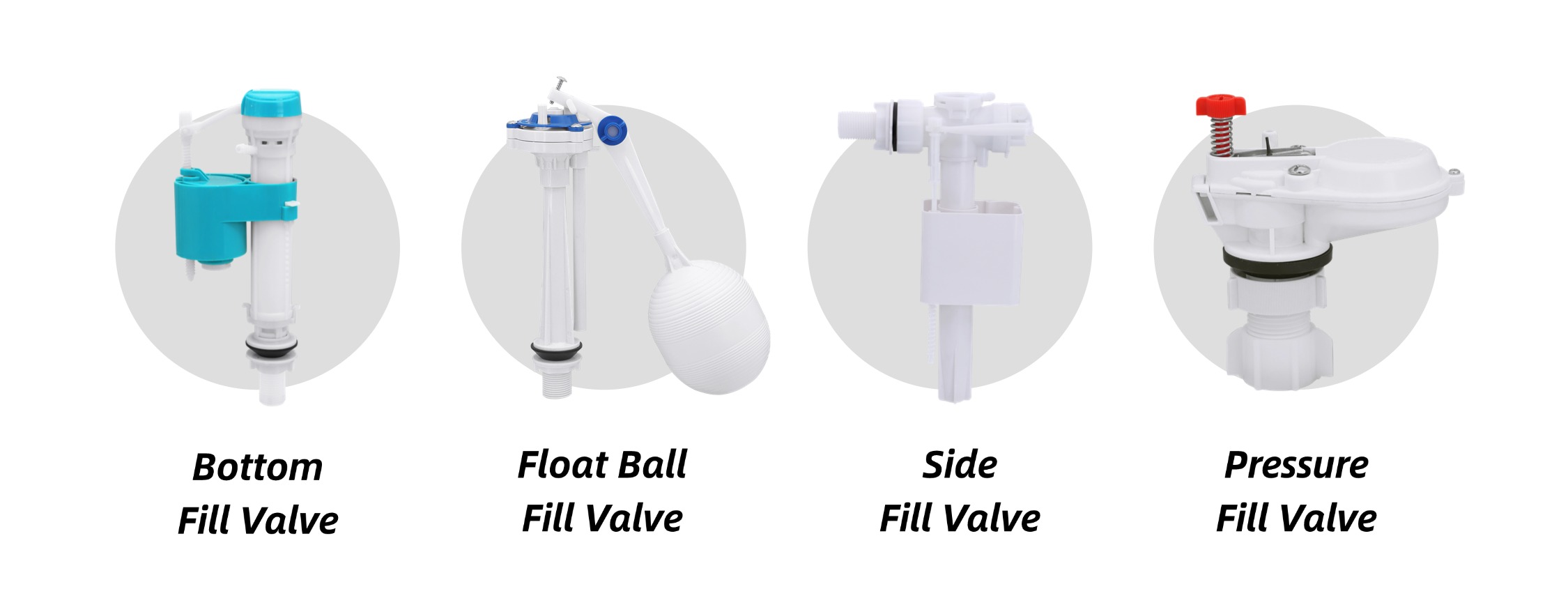
2. Two Common Types of Toilet Fill Valves


It uses a lever with a float ball to sense water level changes. As the float rises, it pushes the lever to stop water flow. However, it takes up a lot of space in the tank.

  • Float-cup fill valve:

This modern, space-saving design is the mainstream option for most toilet tank systems today. The dual-float structure helps maintain stable refill speed and ensures quick shut-off when the water level is reached.


3. Preparations Before Adjusting the Fill Valve


  • Turn off the water supply (angle valve).
  • Remove the toilet tank lid.
  • Confirm the type and structure of your fill valve.
  • Locate the adjustment mechanism: screw, sliding rod, float clip, or adjustment tab.


4. How to Adjust the Toilet Fill Valve?


1) Float-cup Fill Valve (Mainstream Design)

  • Coarse adjustment:

Most adjustable fill valves consist of two sections. Remove the locking clip or pin between them to raise or lower the valve height when the difference between actual and desired water level is large.

  • Fine adjustment:

Locate the adjustment screw or lever near the float cup and turn it clockwise or counterclockwise to fine-tune the water level.

Note: Some designs adjust only the inner float height. After that, make sure the outer float is also set to the same height.

  • Water level reference:

Fill until the water reaches the tank mark or sits about 1.5cm below the top of the overflow tube.


2) Float-ball Fill Valve (Traditional Design)

  • Coarse adjustment:

Metal rods can be bent slightly to raise or lower the water level.

For plastic-rod designs, loosen the knob at the joint area to adjust the float height.

  • Fine adjustment:

Some float balls can be screwed upward or downward to fine-tune the water level.

  • Water level reference:

Same as above—tank mark or about 1.5cm below the overflow tube top.


5. How to Test After Adjustment


  • Turn on the water supply and let the tank refill.
  • Check if the water reaches the correct level marking.
  • Inspect the fill valve base and connections for leakage.
  • Listen to the refill sound: a good valve should stop instantly without dripping.
  • Flush to confirm strong siphon and smooth waste removal in the toilet bowl.
  • Run 3–5 cycles to ensure stable water level and proper shut-off.


6. Conclusion


1) Choose a height-adjustable and high-compatibility toilet fill valve.

2) Select quiet-refill and water-saving certified products for better performance and lower long-term water cost.

3) Jielin Plumbing Fill Valve Advantages:

  • 3-year warranty and durable construction
  • Multi-level height adjustment compatible with most toilet tank designs
  • Quick shut-off technology for stable water level

4) Water level adjustment is simple and easy for most users.

5) Proper adjustment improves flushing power and reduces water waste.

6) Replace the fill valve when it becomes noisy, unstable, or difficult to adjust.